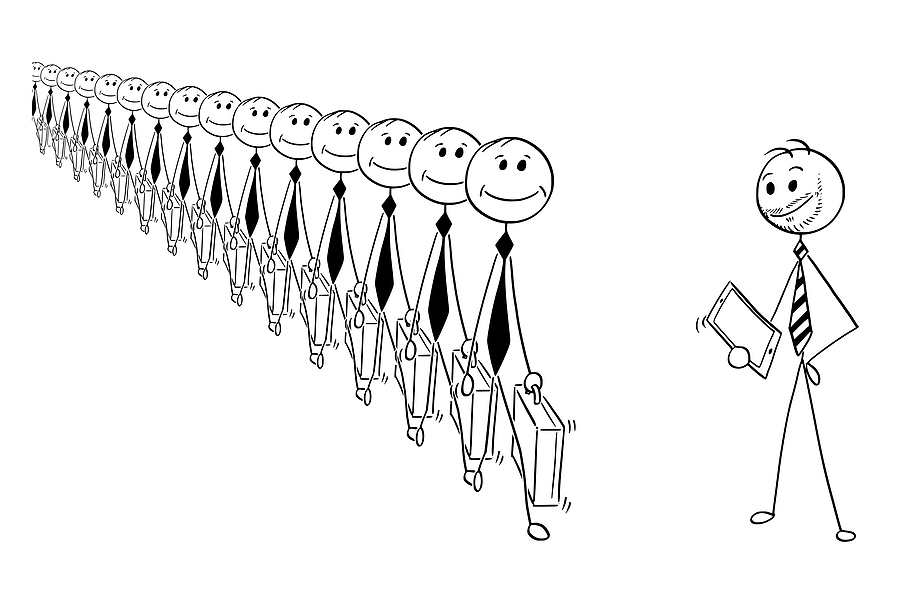
On Stupidity

Dietrich Bonhoeffer's theory explains much of contemporary politics and culture.

By John Leake
Courageous Discourse

August 24, 2023

In 1943, the Lutheran pastor and member of the German resistance, Dietrich Bonhoeffer, was arrested and incarcerated in Tegel Prison. There he meditated on the question of why the German people—in spite of their vast education, culture, and intellectual achievements—had fallen so far from reason and morality. He concluded that they, as a people, had been afflicted with collective stupidity (German: Dummheit).

He was not being flippant or sarcastic, and he made it clear that stupidity is not the opposite of native intellect. On the contrary, the events in Germany between 1933 and 1943 had shown him that perfectly intelligent people were, under the pressure of political power and propaganda, rendered stupid—that is, incapable of critical reasoning. As he put it:

Stupidity is a more dangerous enemy of the good than wickedness. Evil can be protested against, exposed, and, if necessary, it can be prevented by force. Evil always harbors the germ of self-destruction by inducing at least some uneasiness in people. We are defenseless against stupidity. Nothing can be done to oppose it, neither with protests nor with violence. Reasons cannot prevail. Facts that contradict one’s prejudice simply don’t need to be believed, and when they are inescapable, they can simply be brushed aside as meaningless, isolated cases.

In contrast to evil, the stupid person is completely satisfied with himself. When irritated, he becomes dangerous and may even go on the attack. More caution is therefore required when dealing with the stupid than with the wicked. Never try to convince the stupid with reasons; it’s pointless and dangerous.

To understand how to deal with stupidity, we must try to understand its nature. This much is certain: it is not essentially an intellectual, but a human defect. There are people who are intellectually agile who are stupid, while intellectually inept people may be anything but stupid. We discover this to our surprise in certain situations.

One gets the impression that stupidity is often not an innate defect, but one that emerges under certain circumstances in which people are made stupid or allow themselves to be made stupid. We also observe that isolated and solitary people exhibit this defect less frequently than socializing groups of people. Thus, perhaps stupidity is less a psychological than a sociological problem. It is a special manifestation of the influence of historical circumstances on man—a psychological side effect of certain external conditions.

A closer look reveals that the strong exertion of external power, be it political or religious, strikes a large part of the people with stupidity. Yes, it seems as if this is a sociological-psychological law. The power of some requires the stupidity of others. Under this influence, human abilities suddenly wither or fail, robbing people of their inner independence, which they—more or less unconsciously —renounce to adapt their behavior to the prevailing situation.

The fact that stupid people are often stubborn should not hide the fact that they are not independent. When talking to him, one feels that one is not dealing with him personally, but with catchphrases, slogans, etc. that have taken possession of him. He is under a spell; he is blinded; he is abused in his own being.

Having become an instrument without an independent will, the fool will also be capable of all evil, and at the same time, unable to recognize it as evil. Here lies the danger of diabolical abuse. Through this, a people can be ruined forever.

But it is also quite clear here that it is not an act of instruction, but only an act of liberation that can overcome stupidity. In doing so, one will have to accept the fact that, in most cases, real inner liberation is only possible after outer liberation has taken place. Until then we will have to refrain from all attempts to convince the stupid. In this state of affairs, we try in vain to know what “the people” actually think.”

The Bible states that the fear of God is the beginning of wisdom. Thus, the inner liberation of man begins by living responsibly before God. Only then may stupidity be overcome.

Bonhoeffer, Dietrich.“Von der Dummheit”: Widerstand und Ergebung. Briefe und Aufzeichnungen aus der Haft. S. 17–20. Muenchen, Christian Kaiser Verlag, 1951.


The Flowering of Mediocrity

August 18, 2023

Source: Bigstock

When someone is said to be lacking in ambition, it is usually meant as a criticism, as if people had a transcendent moral duty to be ambitious. How else but by ambition will mankind advance?

I grant that ambition is sometimes, or often, necessary, but it is a virtue, like bravery, that is not self-standing. To be brave in a bad cause is worse than to be cowardly in the same cause. And it hardly takes much historical knowledge to realize that ambition can be the closest ally of monstrous evil.

If everyone were ambitious, what a terrible world it would be! The constitution of human society requires people of very different qualities, the unambitious as much as the ambitious. In some respects, the unambitious, those who are not driven to achieve anything, are fortunate: They are not tortured by the idea that they must improve on what they have already done, that they must forever go onwards and upwards. They can be content with their lot in a way that the ambitious never can be.

“It hardly takes much historical knowledge to realize that ambition can be the closest ally of monstrous evil.”

Of course, such contentment has not had good press; but that is because writing is always done by the ambitious, as history is usually written by the victors. The dilemma is posed in the following fashion: Is it better to be a discontented man or a contented pig? The “correct” answer is contained in the way the question is phrased; for who would say it is better to be a pig than a man? (I leave aside the question of the pig’s actual level of intelligence and self-consciousness.)

The ambitious tend to regard the unambitious as wallowing in the swill and mud of ordinary existence. They have the contempt for the unambitious that the intellectual often has for those who’ve never read a book. No doubt this picture is sometimes true: One meets people whose steel-plated complacency repels. But this complacency is far from confined to the unambitious; it is found among the ambitious who have succeeded triumphantly without any particular talent. It is often written on their faces, as unmistakably as hardship is written on other faces.

My thoughts turned to the question of ambition when I considered our gardener in France, who comes twice a week. He is a man in his 50s who has always lived alone and who refuses all payment more than 50 percent higher than the minimum wage, though we would be prepared to pay him more.

To see him work is a rare pleasure. He obviously loves what he does. He works fast, efficiently, and with an aesthetic sense. You soon realize that supervision of his work would be an impertinence. Seeing him from the corner of your eye, however, you see that he never lets up. If he says he has worked three hours, he has worked three hours, with no time off for mooning or coffee breaks.

What he likes is to work alone. I would like to know what he thinks about as he is working but of course do not ask. We have had conversations with him over a beer, however. He detests large cities, especially Paris, Marseille, and Lyon, and hopes never again to have to go to them. He dislikes the rush, the pollution, the insincerity, the greed, the incipient violence, the falsity of urban life. He is, as they say, du coin—he was born round here and wants to die round here.

He lives in a rather beautiful village a few kilometers away, though I doubt that his habitation is luxurious. I imagine, on the contrary, that it is very simple, where very little can go wrong. (We are always having to call the plumber, or the electrician, or the glazier, or the gasman, or the roofer, or the financial expert, etc., each time with a sinking heart.) When we either go to or pass through the village, we often see him sitting outside the bar, having a quiet pastis and chatting with a friend. He spends hours like this. I should add that he is far from stupid.

Because I am ambitious, I cannot imagine myself being contented with a life such as his. Since we tend to assume that everyone is like ourselves, I am inclined to suppose that there must be some deep psychological wound in him that renders him so superficially content with his life—but that underneath, he must be suffering a nameless sorrow.

No doubt I do this to lessen the torture that ambition inflicts upon me, though I am well past the age at which I can deceive myself into thinking that one day I might achieve something worthwhile, or even better than merely worthwhile. I shall be driven to effort until the day I die.

But at least my ambition has been harmless to others. One of the troubles of the modern age (it seems to me) is that its exacerbated individualism has spread ambition far too widely. Nietzsche had no time for the religion of the poor and humble, which he thought exacted a terrible price on superior persons rather like himself. He also seemed to extol the will to power as a cure of the cultural anemia brought about, in his opinion, by religion, particularly the Christian religion.

Whatever one may think of Nietzsche as a philosopher, his prediction of the decline of religion—or rather, the continuation of its decline, for he was only 7 years old when Matthew Arnold wrote his great poem about the decline of religious faith, “Dover Beach”—has come true, and power is the transcendent goal that has replaced salvation in the beyond.

Nietzsche disdained the multitudes and thought that it was superior persons who should seek power, admittedly not in the political field. What happened, however, was that huge numbers of people sought power as the only transcendent good; and given the normal distribution of most human qualities such as talent, it was inevitable that most people who sought (and achieved) power were mediocrities. In other words, the decline of religion, far from conducive to an age of personal and artistic superiority, as Nietzsche hoped, conduced to the very opposite, the flowering (if I may be allowed what seems like an oxymoron) of mediocrity.

Theodore Dalrymple’s latest book is Ramses: A Memoir, published by New English Review.

For Goodness' Sake

July 28, 2023

Source: Bigstock

Some years ago, in Australia, I appeared on a platform with a prominent intellectual, many times more famous than I. We were asked what it took to be good.

The famous intellectual, who had had a brilliant career, answered that in order to be good, you had to be intelligent. When my turn came to answer, I said that the previous answer was not only wrong in fact but appalling in its implications.

It seemed to me, I said, that there was no connection between intelligence and goodness, and since the previous speaker was obviously referring to the 1 percent of the population or so that she thought might be approximately her intellectual equal, she was in effect saying that the vast majority of human beings could not be good. I count myself a misanthrope, but I am not as misanthropic as that.

“The scene is set for a kind of prolonged coup d’état by the mediocre.”

She tried to deny that she had said any such thing, but the audience corrected her: She had indeed said it, and, without resorting to Freudian analysis, I think it revealed her true belief in the matter.

I know what she meant, however. To be good, you must have the right opinions about important abstract questions affecting humanity, and to have those you must be well-informed and capable of drawing correct conclusions from a large amount of information. In short, to be good you must both be highly intelligent and agree with me.

The intelligent are much given to the sin of pride, a sin that is not shared, in my experience, by the truly brilliant. Charles Dickens, for example, who knew himself to be a man of genius and called himself “the Inimitable” (which he certainly was), once wrote that he held his talent in trust. He meant by this that it was God-given and he had a duty to use it for the benefit of mankind. Few people have worked harder than he, but no amount of effort by itself would have sufficed to produce so many immortal characters and pages. For reasons that will never be elucidated, he was born with a spark that the rest of us do not have.

The idea of goodness as having the right ideas on abstract questions is a godsend to mediocrities. It allows them to learn and repeat a few phrases or formulae and think that they are good and therefore ought to have a special role to play in the direction of society.

I have no disdain for mediocrity and mediocrities as such; they are, indeed, very necessary to the functioning of any society, as is hypocrisy. (Try to imagine a world without hypocrisy—how dull, frightening, and unbearable it would be! There is, of course, hypocrisy and hypocrisy, of the laudable and necessary, and of the abominable and dangerous, kind, with everything in between.)

Mediocrity is very well in its place; among other things, it oils the wheels of administration. Much has to be done routinely, and if everyone were constantly brimming with brilliant ideas demanding that they be put immediately into practice, chaos would result. Besides, many people like to lead their lives as trains run on rails. It is as well that they exist. Moreover, even very talented people are usually mediocre in the largest parts of their lives.

But with the spread of the idea that goodness consists entirely of having the right ideas about the abstract questions of the day, presented in such few slogans that even the meanest of intelligences can grasp or memorize them, together with the seemingly obvious principle that the good should inherit the earth, the scene is set for a kind of prolonged coup d’état by the mediocre. And when it comes to the current crop of politicians in the Western world, many of them seem to have mediocrity inscribed on their faces.

By such, I do not mean that they make mistakes. Everyone does that. I mean that they look as though they lack the raw capacity to think properly. Perhaps even worse, they also look characterless, as if they had experienced nothing, or might as well have done so for all the trace experience has left on their faces. These do not even rise to the level of malignity or low cunning; they somehow convey the prolonged consumption of meals they have never had to pay for. When they smile, there is something triumphant in their expression, as if they were subliminally aware that they had triumphed in life without having fully deserved to do so.

The one characteristic that they have, however, is ambition. They are mediocre, not particularly intelligent, and characterless; but they are ravenously ambitious. Ambition, rationalized by supposed goodness, takes up all the mental space that should be occupied by other traits, thoughts, and desires. They are the kind of people who can endure any amount of boredom at a meeting, so long as it advances their career.

“Genius,” said Carlyle more or less, “is an infinite capacity for taking pains.” This is not so, but it certainly captures something about what is required to rise in a bureaucratic organization these days. Power does not so much grow out of the barrel of a gun, as Mao Tse-Tung put it, as out of the ability to get an item on the agenda of a meeting. The meeting is the bazooka of the apparatchik.

Of course, I am painting with a broad brush. Bureaucratic infighting is nothing new in the history of the world, nor is talent even now lacking. Scheming nonentities there have always been, and not a few of them were successful. But I do not remember a time when there seemed to be so many of them, or when the dark arts of infighting were so essential to success as measured by place in a hierarchy. The heads of universities used to be distinguished people; museums were run by scholars. Sloganeering was not a path to success and indeed was suspect as being indicative of intellectual incapacity. You don’t have to be intelligent to be good, nor do you have to be intelligent to succeed in modern organizations. I could give many concrete examples, but I wish to avoid legal complications.

Theodore Dalrymple’s latest book is Ramses: A Memoir, published by New English Review.